


















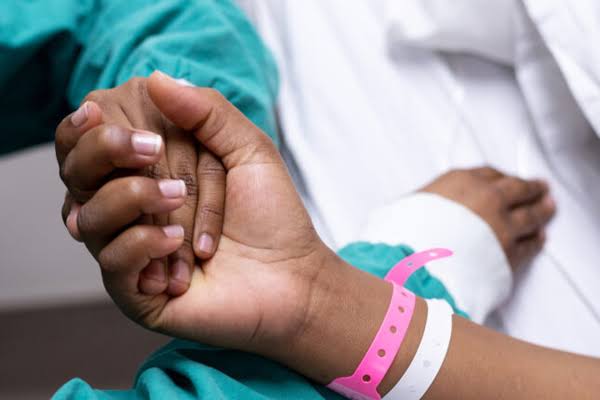
When Aggie, a 40-year-old resident of Nabuti village, Central Division in Mukono district, discovered that she was pregnant with her sixth child, she did not celebrate the news. Instead, she was overwhelmed by fear.

The mother of five had consistently used pills for family planning, believing she had done everything possible to avoid another pregnancy. But when the method failed, she found herself under intense pressure from her husband, who demanded that she terminates the pregnancy.
Despite her reservations, emotional abuse and threats eventually drove her to seek an abortion from a health facility. Her first stop was a government health facility in Mukono district where she hoped to get it, but was instead turned away. The doctor told her that it was illegal for them to carry out an abortion on a perfectly healthy person.
A private clinic also refused to help her under the same circumstances that it was illegal for them to carry out that procedure.
“They told her that they risked imprisonment if they carried out an abortion on a perfectly healthy person and that they allow forbid them” she said.
Running out of options, Aggie resorted to taking local herbs recommended by a friend to induce an abortion. Within hours, she was bleeding heavily.
“I thought I was going to die,” she recalls. Aggie was later taken back to the first government hospital she had visited and given post abortion care. She says she was kept for monitoring for two days and there after given tablets to take home.
“I was admitted for two days and was given three drips plus some tablets which I later took for two weeks. While there, a female nurse advised me to use a coil for family planning because it was more effective for a woman in my condition,” Aggie said.
Aggie’s experience reflects the difficult reality facing many girls and women in Uganda, where unintended pregnancies continue to fuel unsafe abortions despite legal restrictions and ongoing efforts to improve maternal health.
When Mary Apio, a mother of two living in Kampala discovered she that was pregnant with her fourth child, excitement was replaced by anxiety.
As a stay-at-home mother, Mary depended entirely on her husband’s income. Before the COVID-19 pandemic, the family lived comfortably. Her husband worked at a biscuits factory in Nakawa division, Kampala, earning enough to pay rent, school fees and meet the family’s daily needs.
However, the Covid-19 pandemic cost him his job.
Determined to provide for his family, the husband later started supplying food to shops and restaurants. Although the business generated some income, it was too irregular and insufficient to support their growing household.
“There were days when we survived on one meal,” Mary says. “Every coin was planned before it was spent.”
When she realised she was pregnant again, panic set in.
“We were already struggling to feed the children we had. I kept asking myself how we would afford another baby.”
Unable to afford care at a private health facility and afraid of being judged, Mary bought abortion pills from an informal provider and took them without medical supervision. At first nothing happened. Then the bleeding began. She said “It became heavier and heavier,” she recalls. “I was terrified. I thought I was going to die.”
Her husband rushed her to a nearby hospital, where she was admitted for emergency treatment.
“When the nurses realised I had taken abortion pills, they became very harsh,” she says. “They asked me why I hadn’t used proper family planning and questioned why I had put my life at risk.” The remarks left her feeling ashamed while she was fighting for her life.
As her condition improved, however, the attitude of the health workers changed. They treated her complications, counselled her on family planning options and supported her through recovery.
Mary and Aggie’s stories represent struggles of many women across the country.
According to the Guttmacher Research institute Survey 2022, Each year, an estimated 297,000 abortions are performed in Uganda, and nearly 85,000 women are treated for complications. Abortions occur at a rate of 54 per 1,000 women aged 15-49 and account for one in five pregnancies.
The abortion rate is higher than average in the Central region (62 per 1,000 women), the country’s most urban and economically developed region.
It is also very high in the Northern region (70 per 1,000). Nationally, about half of pregnancies are unintended.
According to Dr. Richard Mugahi, the commissioner in charge of reproduction and infant health at the Ministry of Health, about 42%t of Uganda’s estimated two million pregnancies each year are unintended. He prefers the term “unintended pregnancy” over “unwanted pregnancy,” explaining that while many pregnancies are unplanned, women may still choose to continue them.
Results from Phase 2 cross-sectional survey of the Performance Monitoring for Action -PMA Uganda project at Makerere University School of Public Health (MakSPH) show that 46% of pregnancies in 2021 were unintended. Of the 2,159 women of ages 15-49 from across the 141 enumeration areas (villages) in 15 sub regions of Uganda interviewed by the study team, at least 54% said their current/ recent pregnancy was intended. The women were asked whether they were pregnant by intention of their most recent birth or current pregnancy and 33% said they wanted a pregnancy later while 13% said they wanted no more children but ended up getting pregnant.
Dr Mugahi says preventing unintended pregnancies should be a national priority through comprehensive reproductive health education, increased public awareness and wider access to family planning.
“In the current economic situation, every pregnancy should be planned and intended,” he says, noting that stronger preventive measures would significantly reduce the demand for unsafe abortions.
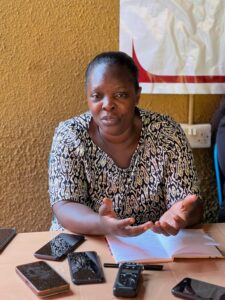 Regina Nakubulwa, a midwife at Mulago National Referral Hospital,
Regina Nakubulwa, a midwife at Mulago National Referral Hospital, says nearly half of all abortions globally are unsafe, with the burden falling disproportionately on developing countries such as Uganda.
She notes that legal restrictions, stigma, poverty, fear and limited access to reproductive health services continue to drive many women toward unsafe abortions.
Nakubulwa says some women resort to drinking harmful substances, inserting sharp objects or using unverified herbal concoctions to end pregnancies. These practices often result in severe bleeding, infections, infertility, sepsis and death.
She adds that teenagers, women in rural communities and those facing economic hardship are among the most vulnerable.
Dr Kayondo Simon Peter, an obstetrician and gynecologist, warns that unsafe abortion remains a major contributor to maternal deaths despite Uganda’s progress in reducing maternal mortality.
 Dr Kayondo Simon Peter, obstetricians and Gynecologists
He says the country’s maternal mortality ratio has declined from 336 to 189 deaths per 100,000 live births, but remains far above the national target of 70 deaths by 2030.
According to Dr Kayondo, unsafe abortion contributes about 6% of maternal deaths, with an estimated 2,800 women dying annually from abortion-related complications. He adds that nearly 300,000 abortions occur in Uganda each year.
He argues that restrictive laws do not eliminate abortions but instead force many women and girls to seek unsafe alternatives.
“Women should receive post-abortion care without judgment, regardless of how the abortion occurred,” he says, emphasising that such care is both legal and mandatory under Uganda’s healthcare system.
However, he notes that uncertainty among health workers regarding the legal framework often results in delayed or denied treatment.
Dr. Kayondo also points to Uganda’s modern contraceptive prevalence rate of just 38%, below the national target of 50%. He attributes this to myths about family planning, fear of side effects, and opposition from male partners, inadequate counselling and limited access to comprehensive sexuality education.
He adds that poverty, gender inequality, religious beliefs and misinformation continue to fuel unsafe abortions, while closely spaced pregnancies increase the risk of complications such as postpartum hemorrhage, anemia and maternal death.
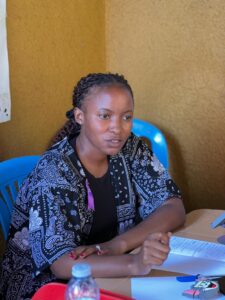 Legal expert Tracy Nabbale from the Women’s Probono initiative
Legal expert Tracy Nabbale from the Women’s Probono initiative says misconceptions surrounding Uganda’s abortion laws continue to create fear among both women and healthcare providers.
She explains that while abortion is highly restricted, it is not entirely illegal. Uganda’s Constitution and previous Ministry of Health guidelines outlined circumstances under which safe abortion services could legally be provided.
However, she says the withdrawal of those guidelines has left many health workers uncertain about their legal responsibilities.
“The absence of clear policy guidance has created fear and uncertainty among healthcare providers,” she says, noting that many practitioners hesitate to provide care even where it may be legally justified for fear of prosecution under the Penal Code (Amendment) Act, 2007 (Act No. 8 of 2007), Sections 141-143, 212 and 224.
Nabbale is calling on the Government to provide clear legal interpretation and policy guidance to enable health workers to offer appropriate reproductive healthcare without fear while safeguarding patients’ rights.