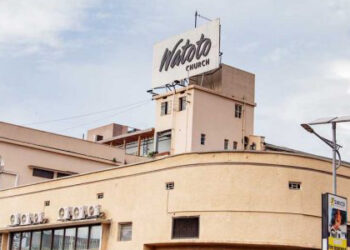



















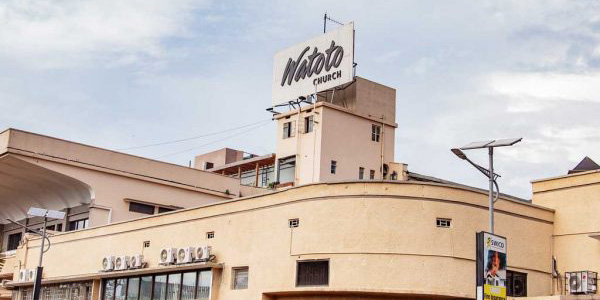
The planned demolition of the former Kampala Pentecostal Church (KPC) building, currently occupied by Watoto Church, to pave the way for a commercial complex has raised questions about the ownership history of the property and the entities seeking approval for its redevelopment.

In July 2023, the Civil Division of the High Court, presided over by then Judge Douglas Singiza, ordered Kampala Capital City Authority (KCCA) and the National Physical Planning Board (NPPB) to reconsider an application by Kampala Play House Limited and Watoto Church Limited for a mixed-use development within three months.
The ruling followed a case filed by the two entities after KCCA and NPPB declined to approve their proposed redevelopment plan, which involves demolishing the existing church structure.
According to court records, the applicants intend to replace the building with a 12-storey complex comprising a three-star hotel, a 3,000-seat auditorium, a shopping mall and a youth centre.
However, the proposed redevelopment has brought renewed attention to the ownership of the historic property, which fronts Kampala Road and Buganda Road, as well as the circumstances under which it came under the control of entities associated with Watoto Church.
Kampala Play House’s ownership history
Records indicate that Kampala Play House Limited was incorporated under the Uganda Protectorate’s Companies Ordinance of 1935 on March 28, 1939, under company number 188.
The company’s original allottees included Norman Godinho, also identified as Mariano Piedade Norman Godinho, his wife, Maria Rita Sophia, and several Indian business partners.
On March 12, 1985, the Minister of Finance issued a certificate authorising the repossession of two sets of properties by Kampala Play House Limited: Plot 87, Kampala Road, which housed a cinema, and Plots 28, 30 and 32 on Buganda Road, Kampala.
A certified true copy of the certificate, reportedly held by the Uganda Registration Services Bureau (URSB), indicates that the company had obtained official recognition of its restored claim to the properties by 1985.
The restitution process coincided with the arrival of Canadian minister Gary Mark Skinner, who had begun conducting services in Kampala through Kampala Pentecostal Church, initially meeting at the Grand Imperial Hotel.
Available accounts indicate that Skinner was introduced to Francis Odida through Jennifer Nabafu, a former Uganda Television (UTV) news anchor and church congregant.
Odida reportedly agreed to sublet the cinema building to Skinner for weekend services, beginning on Easter Sunday in 1984.
Odida, a former Commissioner of Culture appointed by then President Godfrey Binaisa, is said to have facilitated the arrangement.
However, accounts from people familiar with the transaction allege that Nabafu later persuaded Odida to allow Pastor Skinner to occupy the building permanently without payment.
The circumstances surrounding that arrangement remain unclear, particularly regarding Odida’s legal authority to transfer or grant permanent rights over the property.
At the time, the property had reportedly been seized during the regime of former president Idi Amin, while the Godinho family, through Kampala Play House Limited, was pursuing its claim under the Expropriated Properties Act.
The issuance of the repossession certificate in 1985, a year after Skinner reportedly began using the building, raises questions about the legal arrangements governing its occupation and subsequent transfer.
Share transfer to foreign religious interests
Documents cited in accounts of the transaction indicate that an agreement was concluded in November 1991 for the sale of all the outstanding share capital of Kampala Play House Limited to a foreign religious organisation.
The purchasing vehicle was reportedly Farrah Capital Corporation, a company registered in British Columbia, Canada.
The acquisition is said to have been financed by members of the South Asian business community in British Columbia, whose names reportedly appeared on a contemporaneous fax listing contributors to the transaction.
On January 21, 1992, an assignment and conveyance was executed transferring all 1,500 shares. The transaction was subsequently registered with URSB on March 30, 1993.
The available documents do not disclose the consideration paid to the Godinho family.
Through the transaction, Kampala Play House Limited, originally established to operate Norman Godinho’s cinema, reportedly came under foreign religious ownership associated with Pentecostal Assemblies of Canada, along with its interests in the Kampala Road and Buganda Road properties.
The transaction is central to understanding the distinction between ownership of the company, its underlying property interests and the separate church entity that operates from the building.
Since 1993, Kampala Play House Limited has reportedly remained registered as a private company, filing annual returns with URSB. Its registered office is said to have moved from Plot 87, Kampala Road, to the Watoto Church building at Plot 89, Kampala Road.
The church, initially known as Kampala Pentecostal Church and later renamed Watoto Church, has grown into one of the largest congregations in East Africa.
Questions over the applicants’ legal standing
The ownership history has prompted questions about the legal relationship between Watoto Church Limited and Kampala Play House Limited, particularly regarding their joint application for the redevelopment of the property.
Some individuals familiar with the matter have questioned whether Watoto Church Limited has the requisite legal standing to pursue the case alongside Kampala Play House Limited.
The question also raises the need to establish the respective legal interests of the two entities in the property and the basis upon which they seek approval to demolish the existing structure.
Pastor Gary Mark Skinner is identified in documents as the founder of Watoto Church Limited, while Kampala Play House Limited has reportedly undergone several changes of name and directorship since its incorporation in 1939.
Company records are also said to link Kampala Play House Limited to the wider Watoto complex, with Gary Skinner and Eugene Stutzman listed among directors in documents relating to associated entities.
In September 2021, the company’s name was reportedly changed from Watoto Holdings Limited back to Kampala Play House Limited, restoring its original name shortly before the redevelopment dispute came before the courts.
A June 2011 annual return for a company with share capital lists Pentecostal Assemblies of Canada and Pentecostal Assemblies of God as shareholders in Kampala Play House Limited.
The same document reportedly lists several individuals, including Rev. Gary Mark Skinner, Chris Komagum, Franco Onaga, agricultural economist Anthony Esenu, management accountant Fred Kawuma and accountant Patrick Kagoro.
The records raise questions about the corporate relationships between the church, the property-holding company and other entities associated with the Watoto organisation.
Commercial redevelopment and funding concerns
The proposed transformation of the property from a church and historic cinema building into a commercial complex has also raised questions about the purpose of the development and its financing.
Critics have questioned whether the proposed commercial activities are consistent with the charitable and religious work associated with Watoto and have sought clarification about the source of funding for the project.
However, the concerns remain allegations and questions requiring documentary clarification. The proposed hotel, shopping mall, auditorium and youth centre do not, on their own, establish that the redevelopment would conflict with the organisation’s charitable objectives.
Further information about the project’s financing, ownership structure and intended commercial arrangements would be necessary to establish the basis of the concerns.
Records relating to Watoto Childcare Ministries describe it as a non-governmental organisation engaged in charitable activities. Kampala Play House Limited, Watoto Church Limited and Pastor Skinner are identified in accounts of the organisation’s history as having played roles in the establishment of the ministry.
Other documents reportedly indicate that Kampala Play House Limited at one point changed its name to Watoto Child Care Ministries following a special resolution signed by Andrew Kimuli. The significance of that change, including its implications for the company’s continuing legal identity and ownership of the property, requires clarification from the relevant corporate records.
Building’s historical significance
Before Watoto’s occupation, the property was widely known as the Norman Cinema building, named after the Godinho family, which reportedly constructed it in the 1940s.
The building served as a cinema and performance hall and was a popular entertainment destination for Kampala residents.
It also hosted important political events, including the Uganda People’s Congress national delegates’ conference in 1980, at which former president Milton Obote was elected party president unopposed.
Its association with Uganda’s political and cultural history has contributed to calls for the preservation of the structure.
The government has reportedly sought to recognise the building as a national heritage site, a move opposed by Watoto Church.
The church maintains that the property was never formally listed under a statutory instrument as required by law.
The disagreement raises a separate legal question about the building’s heritage status and whether the relevant authorities followed the statutory procedures required to protect it.
Watoto’s response
Efforts to obtain a response from Pentecostal Assemblies of Canada were unsuccessful by the time of publication.
Priscilla Cochrane, the organisation’s Strategic Initiatives and Engagement Lead, was contacted by email and asked to respond to questions concerning the property’s ownership history, the share-transfer arrangements, the proposed redevelopment and its financing.
An automated response received on October 8, 2026, indicated that she would be available to respond on October 12, 2026. However, no substantive response had been received by the time this article was prepared.
The questions surrounding the property therefore remain centred on the documentary history of its ownership, the relationship between the entities involved in the redevelopment application, the legal basis for the proposed demolition and the building’s heritage status.