
















By Jael Namiganda

The Domestic Violence Act Coalition has called for stronger enforcement of existing laws, increased government funding and improved access to justice for survivors of gender-based violence (GBV), amid persistent cases of violence against women and girls in Uganda.
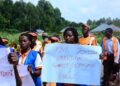
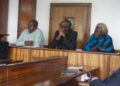
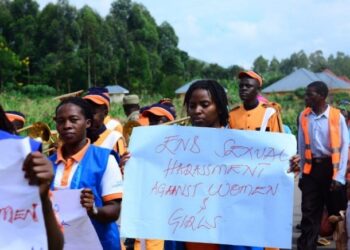
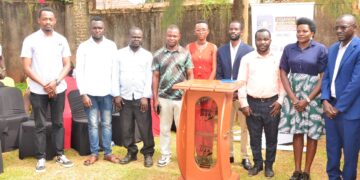
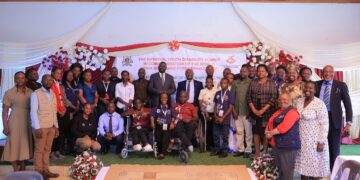
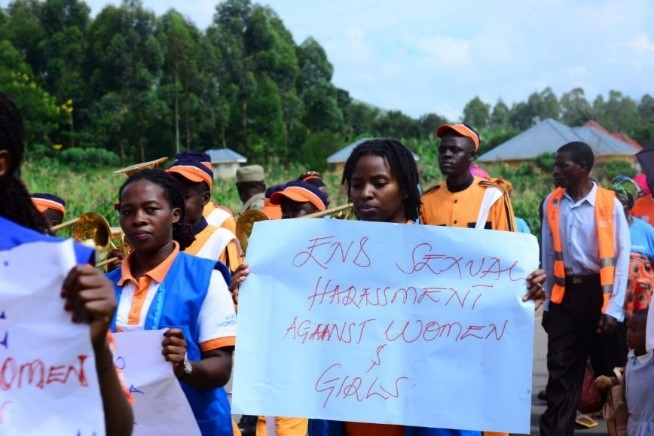
The call was made during a press conference held to mark the 16 Days of Activism Against Gender-Based Violence, where women’s rights organisations and human rights defenders raised concern over the continued prevalence of violence despite the existence of laws intended to protect survivors.
According to the 2022 Uganda Demographic and Health Survey, 43.7 per cent of women aged 15 to 49 have experienced physical violence, while 17 per cent have experienced sexual violence.
The survey further indicates that 43.3 per cent of ever-married women have experienced spousal violence, including emotional abuse at 32.8 per cent, physical violence at 24.8 per cent and sexual violence at 12.8 per cent.
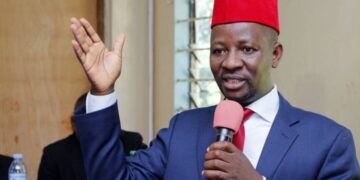
John Amito of FIDA Uganda said the statistics point to the need for stronger action to address violence against women and girls and ensure that existing legal protections translate into meaningful protection.
Police statistics presented by Hope Nakunda of Raising It’s Indigenous Uganda also revealed the extent of the challenge.
According to the figures presented, Uganda Police recorded 12,361 domestic violence cases and 10,493 defilement cases, with female children accounting for 10,328 of the defilement victims. The statistics also included 10,492 rape cases and 407 human trafficking cases.
Nakunda highlighted the gap between reported cases and successful prosecutions, noting that only 614 domestic violence cases resulted in convictions among those that proceeded to court.
She attributed the low levels of reporting and access to justice to stigma, economic dependence, victim blaming and survivors’ lack of confidence in the justice system.
The coalition also expressed concern over the growing forms of technology-facilitated gender-based violence, including cyberstalking, online harassment and the non-consensual sharing of intimate images.
Speakers noted that while Uganda has laws such as the Domestic Violence Act of 2010, the Children’s Act and the Prevention of Trafficking in Persons Act, implementation remains weak due to inadequate funding, limited institutional capacity and poor enforcement.
They further observed that survivors continue to face difficulties accessing essential services, including healthcare, legal aid, psychosocial support and emergency shelters.
Women with disabilities and refugees were identified as particularly vulnerable groups because of additional barriers in accessing protection and justice services.
Beyond the social and human rights consequences, the coalition highlighted the economic impact of gender-based violence on the country.
Nakunda cited estimates by the Forum for Women in Democracy indicating that GBV costs Uganda approximately Shs31.3 trillion annually, while research by the Economic Policy Research Centre puts the direct cost of inaction at approximately 2.31 per cent of Uganda’s 2024 Gross Domestic Product.
The coalition said the economic burden is reflected in lost productivity, healthcare expenses and the wider consequences of violence on families and communities.
To address the challenges, the coalition called on Parliament to expedite pending legislative reforms, including the Marriage Bill and Witness Protection Bill, while strengthening the enforcement of the Domestic Violence Act and the Maputo Protocol.
It also urged government and development partners to increase investment in survivor support services, including emergency shelters, specialised investigation units, legal assistance and psychosocial care.
Akon Angela Zochire called for greater accountability among healthcare providers, law enforcement agencies and telecommunications companies to ensure that survivors receive timely assistance and protection.
The coalition’s regional campaign theme is “Renewing Our Power: Collective Action to Prevent Violence Against Women.”
The campaign calls for collective responsibility among government, civil society, communities and other stakeholders to prevent violence, strengthen access to justice, protect survivors and end impunity.