
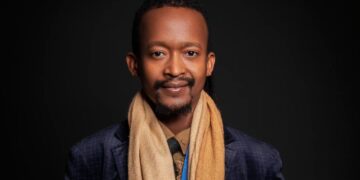










Journalists seeking stronger professional unity, improved welfare, better protection for media practitioners and a more effective Uganda Journalists Association (UJA) have been urged to support Kabuye Ronald for Secretary General.

Kabuye, the serving UJA secretary for information and spokesperson, is seeking the position on the strength of his experience in the association, advocacy for journalists’ rights and commitment to redefining journalism in an era increasingly shaped by digital media and emerging technologies.
Having served two terms as information secretary and spokesperson, Kabuye says his experience has given him a deeper understanding of the challenges journalists face and the need to strengthen UJA’s role in defending their interests.
During his tenure, he has advocated for journalists whose rights and welfare have allegedly been violated by security personnel, government officials, employers and members of the public. His campaign highlights efforts to seek intervention in cases involving journalists who have faced threats, intimidation or harm while performing their professional duties.

Kabuye has also pursued accountability for alleged violations of journalists’ rights, including taking cases to court where necessary. His supporters consider this record of advocacy an important qualification for the association’s top administrative position.
Beyond his responsibilities at UJA, Kabuye works with Metro FM 90.8 as a producer, senior journalist and presenter. He is also the managing editor of Trusted News Uganda, an online publication.
These roles have exposed him to newsroom operations, media production, reporting and the changing demands of the journalism profession.
His experience in both media practice and professional association leadership could prove valuable as UJA seeks to address challenges facing journalists, including changing business models, technological disruption, professional ethics and the need for continuous skills development.
At the centre of Kabuye’s campaign is a commitment to redefining journalism while preserving the values that underpin the profession’s credibility.
He argues that journalism must continue to uphold truth, professionalism, ethics, the public interest and the voices of ordinary citizens while adapting to the realities of digital media and emerging technologies.
His agenda raises important questions about how journalists can maintain accuracy and accountability in an environment where information spreads rapidly and digital platforms continue to transform how news is produced and consumed.
Kabuye says his priorities include strengthening unity among journalists, improving their welfare, promoting professional standards, supporting young and emerging reporters, and creating opportunities for skills development and innovation.
If implemented, these priorities could help make UJA more responsive to the needs of journalists at different stages of their careers and those working across traditional and digital media platforms.
The Secretary General plays an important role in coordinating the association’s activities, implementing its programmes and translating members’ priorities into practical action.
Kabuye’s two terms as information secretary and spokesperson have given him experience within UJA, which he hopes to use to address the association’s institutional challenges and build on opportunities for improvement.
His campaign also places journalists’ safety and professional dignity at the centre of UJA’s future. For reporters, photographers, producers and other media practitioners who face threats while covering public affairs, effective representation and timely intervention remain critical concerns.
However, the ultimate test of any candidate will be the ability to translate campaign promises into measurable results, remain accountable to members and ensure that the association represents journalists across the country.
As journalists prepare to elect their next executive leaders on November 7, Kabuye is urging members to look beyond the election and consider the future they want for their profession.
He argues that a stronger UJA should be built around unity, professional excellence, improved welfare, protection of media practitioners and the development of skills needed to navigate the changing media environment.
“Together, we can build a stronger, more relevant, and more respected journalism profession,” Kabuye says in his campaign message.
His campaign is anchored in a clear appeal: redefine journalism, strengthen the association and put the interests of journalists at the centre of UJA’s work.